An example of how we could approach a brief, not a completed installation or customer testimonial.
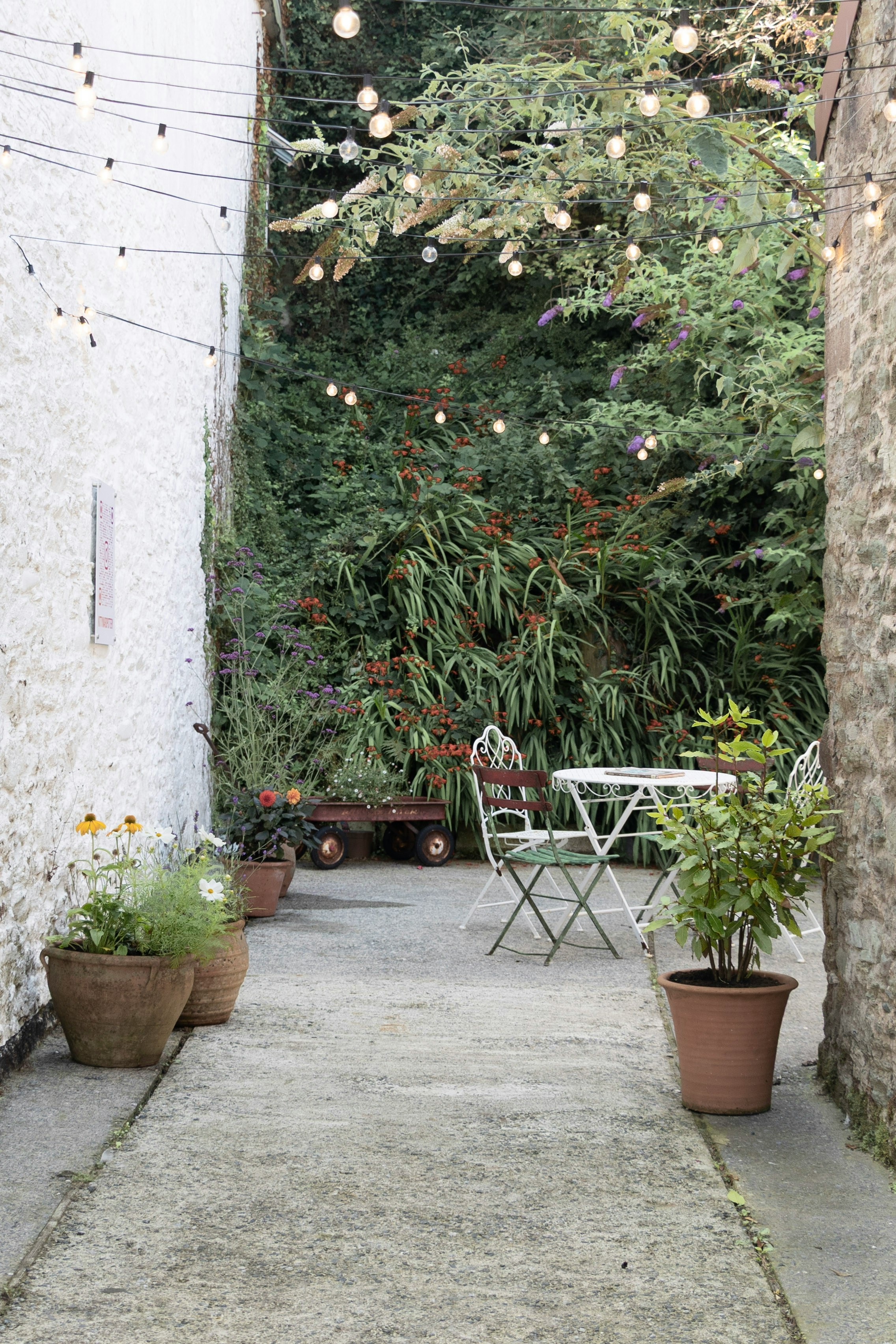
Inspiration / not a customer installation
THE STARTING POINT
Start with everyday life. Then the design.
Imagine someone who loves tending pots and borders but finds carrying water tiring, travels regularly or simply has less time. They would like help with the repetitive jobs and a comfortable place to sit outside as the light fades.
01 / INFORMED CONSULTATION
Before we suggest a system, we would ask…
Which planting needs attention, and what gardening would you like to keep doing yourself?
What water pressure and flow are available, where are power and connectivity, and which routes need to remain clear?
Would a simple timer, large controls or an app feel most comfortable?
What budget and seasonal upkeep would suit you?
This is a conversation about comfort and confidence, not a test of the person. We also check that the project has the technical expertise it needs.
02 / REAL CHOICES
Different routes. The right fit for you.
We would compare benefits, limitations and costs together. A more complex system is only worthwhile if it serves the people using it.
A simple watering starting point
A suitable timer and targeted watering could serve selected pots or beds.
What to weigh upIt may be straightforward to use, but settings still need checking as planting and weather change.
A more connected garden
Separate watering zones, suitable sensors and outdoor lighting could offer more control.
What to weigh upThey introduce equipment, connectivity and maintenance choices. Water or bill savings depend on the actual design and use.
03–04 / THE AGREED PROPOSAL
Know what is included. Know what happens next.
After assessment, we turn the preferred option into a design and written proposal. Your priorities set the budget; the specification sets the price and programme.
The design would map watering areas, pipe routes, access and light positions. It would consider planting needs, drainage, neighbours and manual shut-off. Water-supply and outdoor electrical requirements would need appropriate checks; wider landscaping would be included only if agreed. A suitable installer would check the required protection against water flowing back into the supply.
A clear quote would separate equipment, fitting, any electrical or plumbing work and ongoing costs. Installation dates would reflect confirmed availability, access, ground conditions and weather; no date would be promised before checking.
Equipment, labour, subscriptions, tax treatment, payment stages, exclusions and any optional support should be clear. No sample price or installation date is promised by this example.
05–06 / INSTALL, COMMISSION & HAND OVER
Working is good. Comfortable using it is better.
We would test together
The agreed setup would be installed and tested for leaks, coverage and manual control. Lighting would be checked in its intended conditions, including timers and any sensors. Settings would be adjusted rather than treated as permanent.
You would leave with
You would walk through the garden and practise the controls you expect to use.
Start, pause and turn off watering yourself.
Try the lights and check that routes remain usable.
Review cleaning, seasonal changes and winter preparation in clear written instructions.
07 / AFTER THE HANDOVER
Support that fits. On agreed terms.
Seasonal adjustments, maintenance or a refresher could be quoted separately. The handover would explain which checks remain yours and which support, if any, has been agreed.
Any optional package has its own price, scope, hours, response targets and exclusions. You choose whether to add it; remote access requires your agreement.
 THE SMART HOMEC O M P A N Y
 Inspiration / not a customer installation